Socrates: brief overview of how childhood experiences led to his later politics
  • Home
  • About
  • Contact

SOcrates' early years

4/21/2016

0 Comments

 
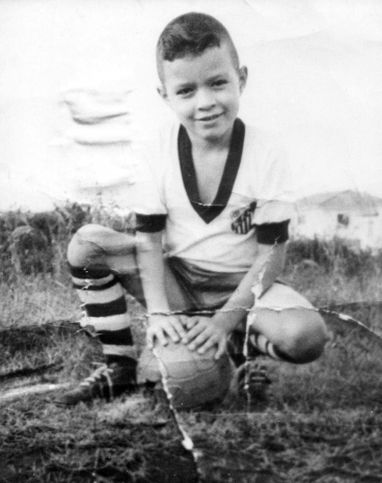
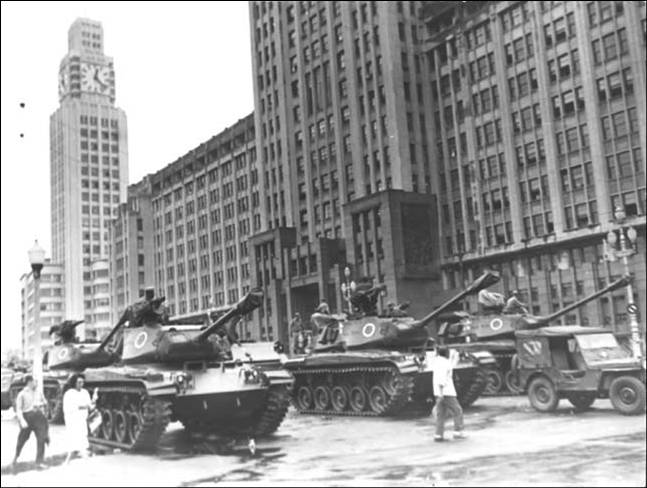
Sócrates was the firstborn child of Raimundo and Guiomar Vieira. He was born in Belém, Pará and relocated with his family to Ribeirão Preto, São Paulo in January of 1960 after his father Raimundo earned an important position as revenue supervisor. This job acquisition earned Sócrates' dad the status of a small town hero in Igarapé-Açu, where the family lived at the time. His father's new salary allowed Sócrates to attend the best school in Ribeirão Preto, Colégio Marista. In a biography written by the journalist Tom Cardoso, it is revealed that the small library Sócrates' father had built in his home, containing philosophy books and other works, came under threat as of the coup d'etat on March 31, 1964. Sócrates watched his father rid himself of books that he so loved; "In 1964, I saw my father tear many books, because of the revolution. I thought that was absurd, because the library was the thing he liked best. That was when I felt that something was not right. But I only understood well much later, in college." At age 8, Sócrates was exposed to the repercussions of the military dictatorship's censorship. His childhood was marked by this event which he came to comprehend as an adult later in life. [19]
Picture


​Courtesy of blogdoodir.com.br/
Socrates as a child
(undated photo)
Picture
Courtesy of http://agenciabrasil.ebc.com.br/
Army tanks in Rio de Janeiro, Brazil
​(1964)
0 Comments

SOCRATES' political militancy

4/20/2016

0 Comments

 
Picture
Courtesy of www.maranhaodagente.com.br/
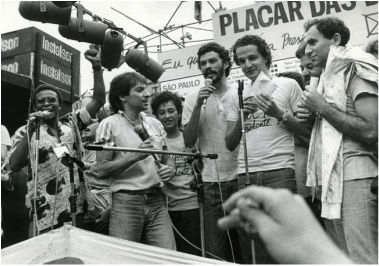
Socrates speaking at Praca da Se, Sao Paulo (4/16/1984)
Picture
Courtesy of betting.betfair.com/football
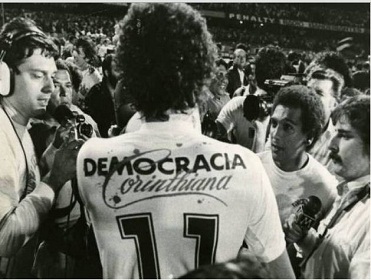
Socrates surrounded by fans and journalists following Corinthians' victory over Sao Paulo in the Sao Paulo championship
​(12/14/1983)
On April 16, 1984 he spoke out in support of Diretas Já (Free Elections Now), a popular movement that called for direct presidential elections.[27] In Socrates and the Corinthians' Democracy Juca Kfouri, a Brazilian journalist, recalls how, "Socrates took the risk of saying, in front of two million people gathered on the cathedral square, that if direct presidential elections weren’t accepted by the regime, he’d go play in Italy.” [28] By hinging his transfer abroad on the outcome of a constitutional amendment, Socrates' political legacy began to form. His denunciation of the military dictatorship and fight to redemocratize Brazil extended his legacy beyond the football field.


As a member of the Corinthians' Democracy, he also called upon the Brazilian population to manifest itself against the regime of the military dictatorship.

​


0 Comments

    Author

    Laura Argueta.
    Senior at Duke University.
    Student in CompSci92.

    Archives

    April 2016

    Categories

    All

    RSS Feed

Powered by Create your own unique website with customizable templates.
  • Home
  • About
  • Contact